
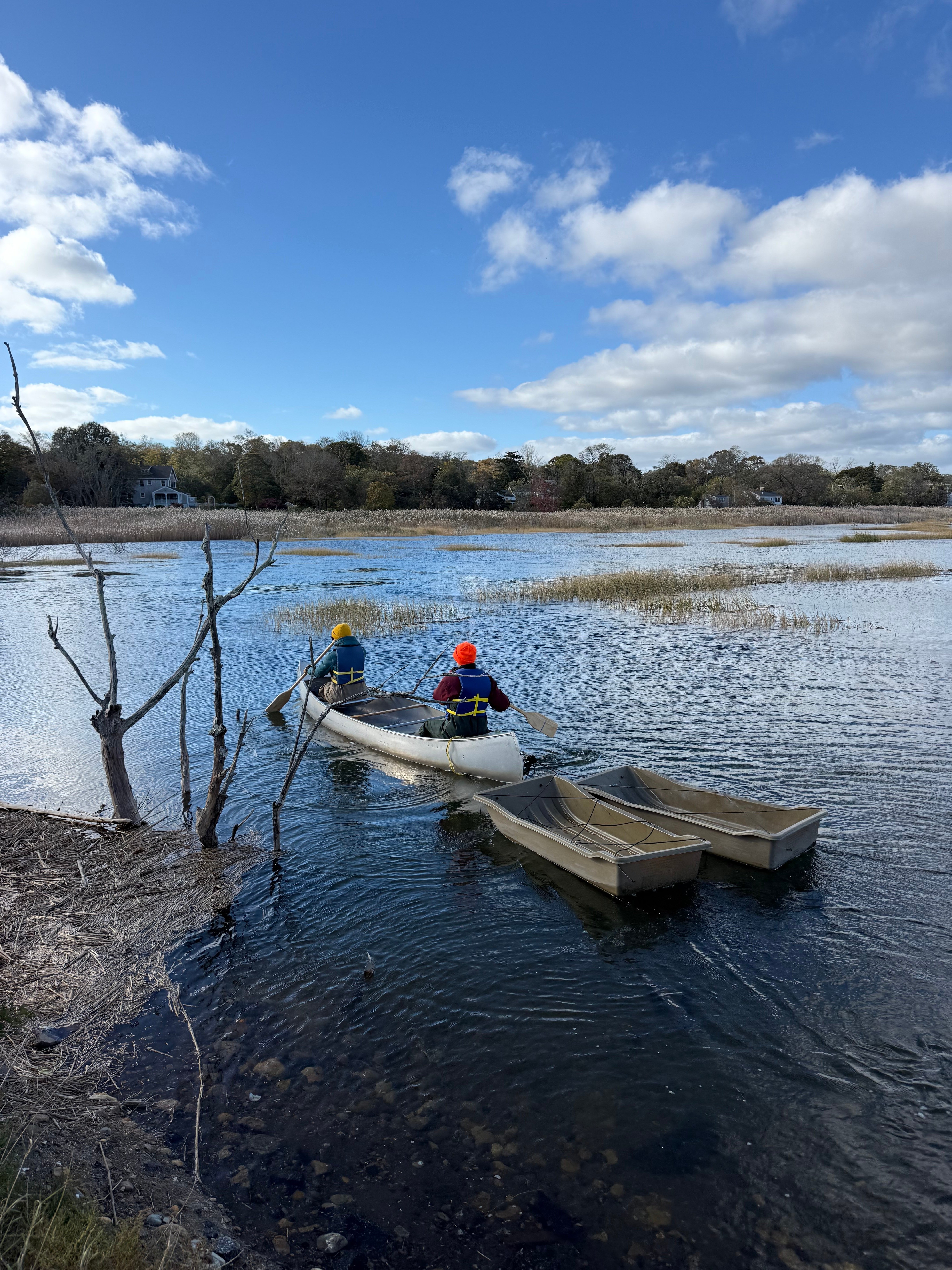
When we talk about climate action, it's easy to think about the big things: ambitious policies, major infrastructure investments, and large-scale restoration projects. But here in New England, climate action is also happening in our own backyards, along our shorelines, and beneath the surface of our coastal waters.
Across the Northeast, Surfrider volunteers, community partners, and local organizations are working together to protect the natural systems that make our coastal communities more resilient. Sometimes that means collecting important scientific data. Other times, it means getting our hands dirty and removing materials that no longer serve a purpose. And sometimes, it means giving something old a new life.
Here are a few examples of what that looks like in action.
Keeping an Eye on Our Underwater Meadows
Seagrass meadows are among some of our most important coastal habitats. They provide essential nursery and feeding grounds for marine life, improve water quality, stabilize sediments, and store carbon.
But these underwater ecosystems face growing pressures from coastal development, pollution, warming waters, and changing environmental conditions.
That's why community science matters.
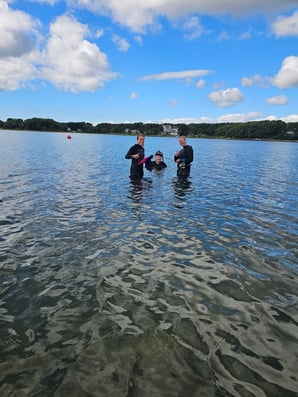
In Falmouth, Surfrider volunteers helped develop a community-run seagrass monitoring site at Bournes Pond, giving local community members a chance to track the health of this important coastal habitat.
Through ongoing monitoring, volunteers can help collect valuable observations and data that contribute to a better understanding of local seagrass conditions and how they change over time. This information can help inform future conservation and restoration efforts.
It's a great example of how local communities can play an active role in protecting the ecosystems in their own backyards. Protecting coastal habitats starts with understanding them, and that understanding begins with showing up.
Restoring Our Salt Marshes, One Stake at a Time
Sometimes, climate action looks a little less like science and a little more like a hands-on cleanup.
In partnership with the Association to Preserve Cape Cod (APCC), Surfrider recently helped remove goose-exclusion fencing from the Sesuit Creek restoration site.
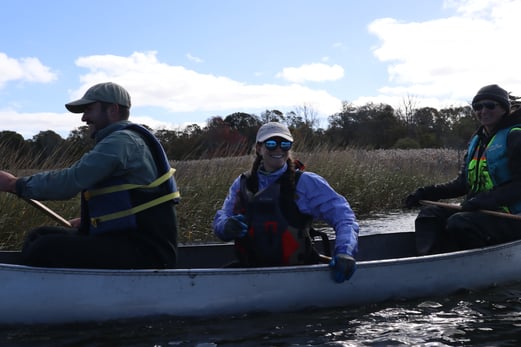
The fencing, made up of garden stakes and twine, had served its purpose in the salt marsh restoration process. Removing it is another important step in supporting the recovery of this coastal habitat.
Salt marshes do a lot of heavy lifting for our coastal communities. They provide habitat for wildlife, help filter pollutants, store carbon, and act as natural buffers against coastal flooding and storm impacts.
As storms become more intense and sea levels continue to rise, healthy wetlands are an increasingly important part of building coastal resilience.
Restoration doesn't end when a project is installed. It takes continued care, monitoring, and community involvement to help these ecosystems thrive.
Giving Oyster Shells a Second Life
Climate action also means rethinking what we consider waste.
This summer, Surfrider partnered with the Mass Oyster Project to bring oyster shell recycling into one of our chapter meetings, giving members an opportunity to learn more about the program, its role in supporting oyster restoration, and how our local communities can get involved.
But we're not stopping at learning!
In December, we'll be getting out into the community to lend a hand with oyster shell recycling ourselves, helping give discarded shells a second life rather than sending them to the landfill.
Why does this matter? Oysters are ecosystem builders. Oyster reefs provide important habitat for marine life, filter water, and support healthier coastal ecosystems. Recycled shells can be used as a resource for future oyster restoration efforts.
It's a reminder that climate action doesn't always mean starting something new. Sometimes it means finding better ways to reuse what we already have and supporting the local organizations doing this important work.
Small Actions, Connected by a Bigger Purpose
Seagrass monitoring, salt marsh restoration, and oyster shell recycling might seem like three very different activities. But they all contribute to the same goal: protecting the natural systems that sustain our coastal communities.
And none of this happens in isolation.
It takes scientists, local organizations, volunteers, community members, and partnerships to make this work possible. It takes people who are willing to spend a morning in the marsh, get out on the water, collect data, or find creative ways to support restoration.
Climate action doesn't have to look the same everywhere. In fact, some of the most meaningful work happens at the local level, through consistent efforts to protect the places we call home.
This is what climate action looks like in New England. And there's a place for everyone in it.
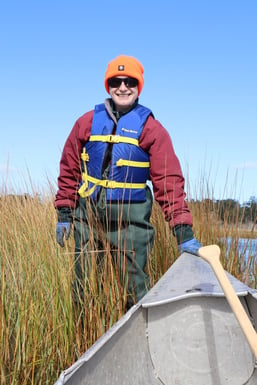
 Isabella joined as the Northeast Regional Manager to lead and grow the chapter network in Connecticut, Rhode Island, Massachusetts, New Hampshire, and Maine. She has a bachelor's degree in Communications, Women and Gender Studies, and Journalism from the University of Delaware.